Category: Tai Chi

  • The Magic of Tai Chi

    The Magic of Tai Chi

    Learning to Simply Be

    Posted on  by metbaseball

    In a world that urges us to go faster and do more, Tai Chi offers something radical: a return to presence. But presence in Tai Chi isn’t just paying attention—it’s being fully alive in each moment, with mind and body united. It’s about loosening the cultural identity that has crusted over your behavior and uncovering something more essential beneath it.

    Tai Chi forms are more than movement—they’re invitations to slow down and move with purpose. The flowing, precise sequences demand focus and balance, naturally quieting the urge to rush. Smoothness matters more than speed, and moving slowly feels not only better—it feels right. That’s how many Tai Chi forms are meant to be done.

    You don’t perform the form through tight control, but through relaxed, mindful awareness shaped by repeated, informed practice. When you start, be alert for tension—but don’t resist it. If you can’t release it, accept it. Don’t fight it.

    In time, this gentle approach transforms how you move. Instead of forcing change, you allow it. Tension dissolves not through effort, but through awareness. As your breath deepens and movements slow, your body begins to respond—opening, softening, aligning itself with the form’s rhythm. Separation evolves into integration. Intention, breath, and motion begin to unify.

    Gradually, the form reshapes how you carry yourself. Your spine lengthens, shoulders relax, and steps become grounded. You begin to stand taller, move more deliberately, and shift your weight with greater awareness. These changes aren’t forced—they emerge. You realize the form was never yours; it belongs to the moment, to the breath, to life’s pulse.

    Your sense of self shifts. It no longer comes from who you think you are, but from how you move, sense, and breathe. Eventually, the line blurs: Are you doing the form—or is the form doing you?

    This is the unfolding of mind and body through motion. It softens boundaries that once kept you apart from the flow of the universe. This unfolding can’t be forced—it arises naturally as you relax, open, and listen to your inner rhythm. Movement releases and flows—without strain, without resistance.

    As you listen more deeply to your body and breath, the form begins to move you. It’s no longer something you just progress through—it becomes something you follow. Subtle shifts in weight, breath, and awareness start to guide your next motion before you even think about it. Instead of controlling the form, you’re responding to it, allowing it to unfold through you with ease and intention.

    It’s how your yi leads your qi, how intention (yi) gently guides your internal energy (qi), and that energy in turn shapes your movement as if the spirit of the form were moving through you.

    At the heart of Tai Chi lie belly breathing and pure intention—intention free of striving. The body follows intention’s lead without rushing or lagging behind. This kind of intention doesn’t spring from desire or reaction—it comes from somewhere deeper, like a compass pointing the way.

    You begin to feel a new freedom—one that moves through you. It lets you act without judgment, respond without hesitation, and merge with the moment.

    Tai Chi doesn’t just teach movement—it cultivates acceptance, patience, and trust. You learn to return to the moment again and again. Every motion, whether a soft ward off or a steady brush knee, marks what you’ve learned—and what you are still learning.

    In this way, Tai Chi becomes a dialogue between self and world—a dance of balance and harmony. As your skill deepens, you unlock the freedom to simply be. That’s part of the magic of Tai Chi.

  • Tai Ji Quan Can Enhance Memory

    Tai Ji Quan Can Enhance Memory


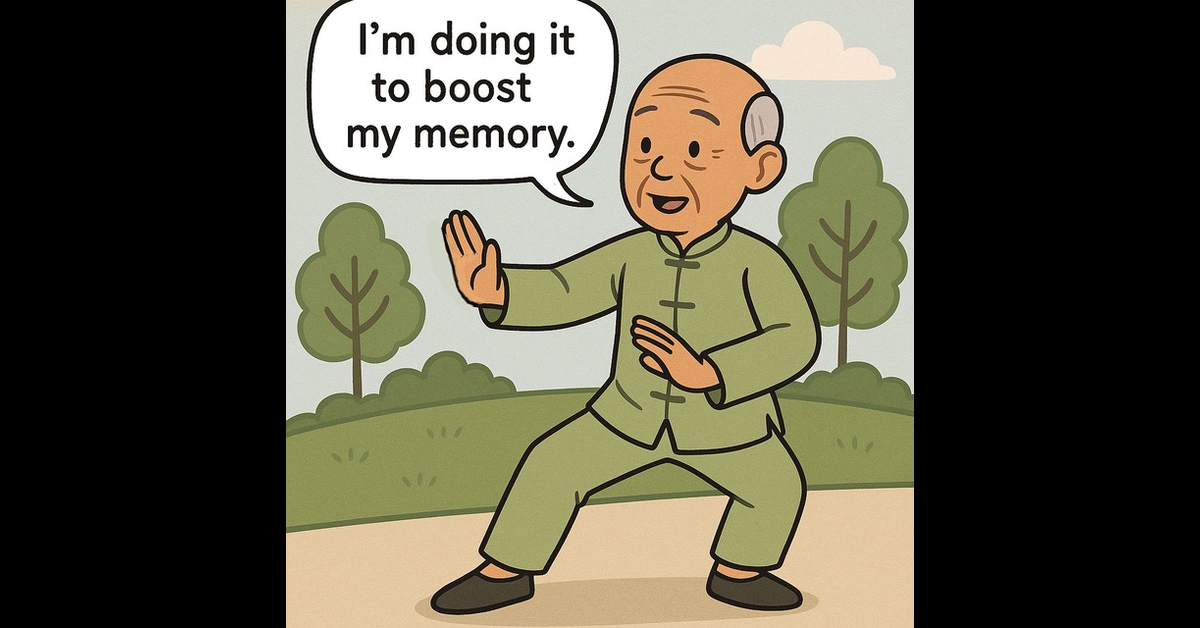
    Besides teaching Tai Chi to seniors, I also like to keep up with health-related research findings in both Tai Chi and Qigong. The latest article I came across is on the NPR website, titled: Tai chi helps boost memory, study finds. One type seems most beneficial.”

    I was curious about what that “type” was, as I had never heard that distinction made before.

    The article’s author, Allison Aubrey, mentions that the study used a “simplified form of tai chi called Tai Ji Quan” (see bottom of page). However, Tai Chi is simply the popular or Westernized name for Tai Ji Quan (also spelled Tai Chi Chuan), which is the original Chinese term, not the name of one form. Tai Chi encompasses a wide range of forms.

    There are indeed simplified versions of Tai Chi Chuan—for example, the Simplified 24-Form Tai Ji Quan was created in 1956 in China to make Tai Chi more accessible to the public for health and exercise. I taught that form for a number of years and co-authored a book about it.

    Curious about which form was used in the study, I tracked down the original research on the Annals of Internal Medicine website. I found that the study participants learned eight forms apparently assembled specifically for the study. There was no mention of how well these forms transitioned into one another, unlike in established forms such as Cheng Man-Ching’s 37 Movement Form, where smooth transitions are a hallmark.

    In the NPR article, Dr. Elizabeth Eckstrom, one of the doctors involved in the study, shared her thoughts on how Tai Chi might help with memory improvement.

    Aubrey wrote,

    “Her theory [Dr. Eckstrom’s] on why tai chi is effective is that it combines the memorization of the movements, known as forms, almost like a dance choreography. ‘So, you’re getting the physical activity, plus the memory piece.’”

    A study participant also shared her personal experience:

    “‘It becomes a meditative practice,’ says Mary Beth Van Cleave, 86, who lives in a retirement community with her wife and their cat in the Portland, Ore., area. She started tai chi at age 75 and says her practice helps her feel grounded and enables her to let go of stress. ‘It’s become an important part of my life,’ Van Cleave says.”

    She added, “In terms of a cognitive boost, she thinks tai chi helps with concentration. ‘I’m more conscious of trying to do one thing at a time.’”

    Later in the article, Aubrey shares how Tai Chi is often misunderstood, again quoting Van Cleave:

    “If you’ve never done tai chi, which is a martial art that incorporates a series of movements, known as forms, with a focus on controlled breathing, too, it may look like nothing much is happening. But that’s a misconception, Van Cleave says. ‘We are working very hard,’ she explains. And, she says, the physical benefits are pronounced.”

    “‘There are so many times I’ve avoided a fall,’ she says. ‘That’s because of the balance that tai chi gives me.’”

    Whether you’re new to Tai Chi or a skilled practitioner, the NPR article is well worth reading. It not only highlights the benefits of the practice, but also reminds us that Tai Chi is more than slow movement.

    It’s a tool worth acquiring at any age, even later in life.


    Tai Ji Quan is pronounced like tie jee chwan.

    • Tai sounds like “tie”, like when you tie your shoes.
    • Ji sounds like “jee”, like the word jeep.
    • Quan sounds like “chwan”, like “ch” in chocolate and “wan” like wand (but a little softer).

    This is how it is said in Mandarin Chinese, and it’s the real name for what many people call “Tai Chi.”


  • Move Slower, Feel Better

    Move Slower, Feel Better


    How Tai Chi Sends Calming Signals to Your Nervous System

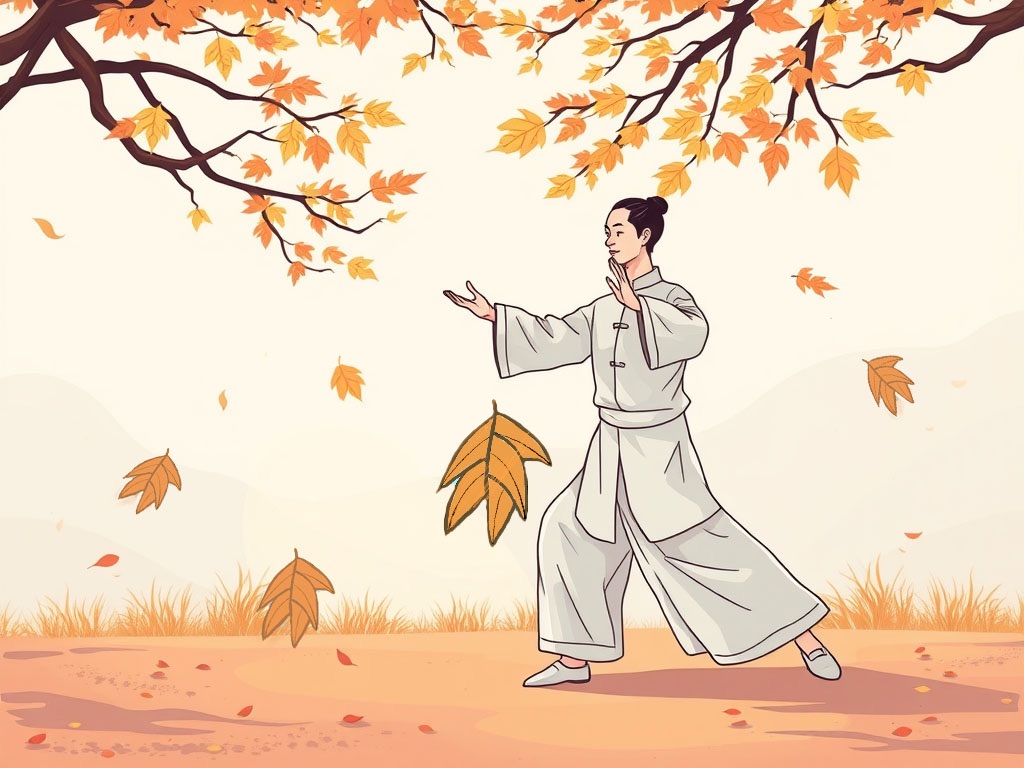
    In our fast-paced world, stress can feel like the default setting. Our bodies stay on high alert—muscles tense, hearts race, and minds flood with thoughts that swirl like autumn leaves on a windy day. But ancient practices like Tai Chi offer a gentle way to tell your nervous system, “It’s okay to relax.”

    Through slow movements, deep breathing, and a peaceful setting, Tai Chi sends powerful calming signals to your brain and body in a variety of ways.

    1. Slow, Gentle Movements

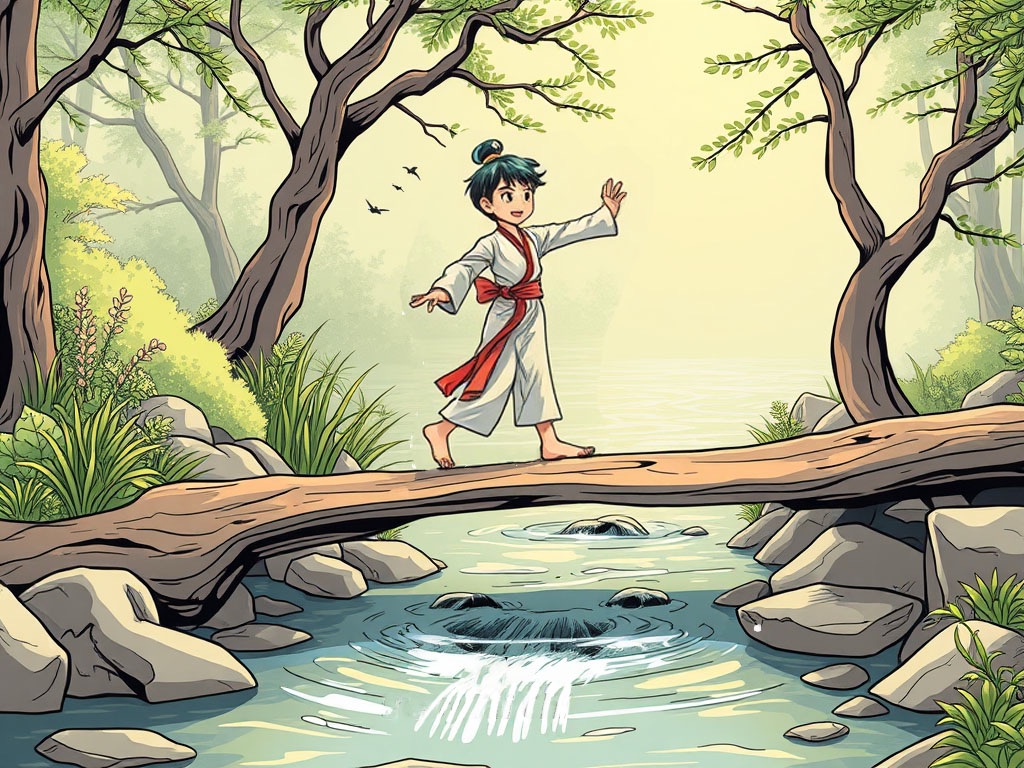
    Control without being controlling—for most, the goal of Tai Chi movements is to be smooth and controlled. It’s almost like moving through water—not because there’s actual water, but because the sensation, rhythm, and control mimic the experience of water’s gentle resistance and flow. You’re guiding your body like a river’s banks guide its current—not forcing it, but gently shaping its path. This kind of control comes from relaxation, alignment, and intention, creating movement that feels calm, balanced, and quietly powerful.

    2. Deep, Rhythmic Breathing

    Many Tai Chi forms encourage deeper, steadier breathing (typically belly breathing—not shallow chest breathing through the nose) to help calm the body. This kind of breathing stimulates the vagus nerve, a key player in calming the body and the main nerve of the parasympathetic nervous system. As you breathe slowly and fully, your brain gets the signal that everything is okay. Oxygen flows freely, stress decreases, and a sense of calm begins to take over.

    3. A Peaceful Environment

    Whether you’re practicing in a quiet room or a calm outdoor space, Tai Chi invites stillness. Then, there’s no loud music, no harsh lighting—just a focus on quiet and calm. This low-stimulation environment helps your brain stop scanning for danger and allows your body to feel safe and grounded.

    4. Mindful Attention

    One of the most powerful parts of Tai Chi is the way it focuses your attention. When you’re moving slowly, breathing deeply, and paying attention to how your body feels, you can’t also worry about emails or deadlines. This mindfulness quiets the “noise” of everyday life and helps reset your nervous system.

    The Message to Your Body: You’re Safe

    When you combine all of these elements—movement, breath, environment, and mindfulness—Tai Chi gently tells your body, “You don’t need to be on alert. You’re safe now.” Over time, your nervous system learns this message well. And when your body knows how to relax, you sleep better, think more clearly, and feel more at peace.

    Tai Chi doesn’t shout its message—it whispers it, again and again, until your whole system believes it.

    Finding Calm in Every Movement

    Tai Chi offers more than just exercise—it teaches your body and mind how to relax deeply. Through gentle movement, steady breath, and focused attention, it sends calming signals that help you find peace amid life’s busy pace. With regular practice, you’ll discover a quieter, calmer you waiting beneath the surface.


  • The Power of Moving Slowly

    The Power of Moving Slowly

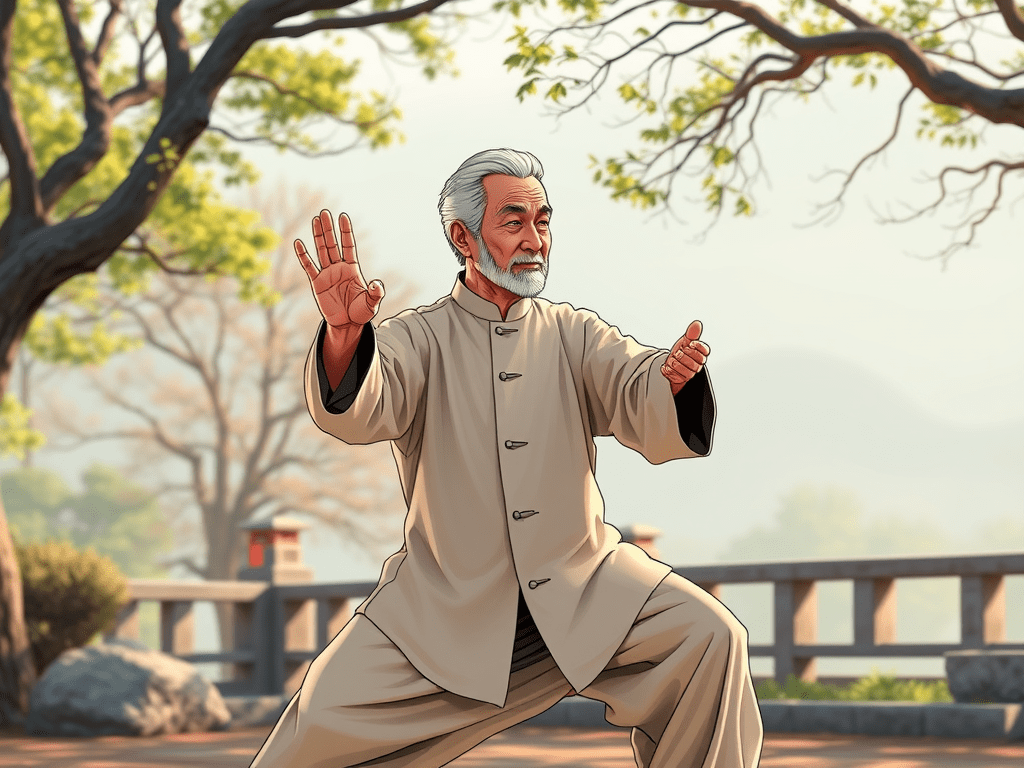
    Tai Chi is famous for its slow, gentle movements. This slowness is one of its biggest strengths—especially for older adults and beginners. This post focuses on hand forms that are done slowly, such as Cheng Man-Ch’ing’s 37-movement form, which emphasizes smooth, controlled, and mindful motion.

    The slow hand forms like the 37-movement form are valued for their health benefits. Their slow pace helps even older adults and beginners improve balance, build gentle strength, and reduce stress safely.

    Gentle strength is the kind of strength that comes from balance, control, and inner stability—not from force or tension. It means using only as much effort as needed, staying rooted and stable, and maintaining a calm, focused mind. Like bamboo that bends but doesn’t break, gentle strength is flexible, steady, and resilient. This kind of strength helps people build muscle tone and stability without straining the body, making it ideal for those who are new to movement or who want to protect their joints and muscles.

    Because of this focus on slow, mindful movement, these forms make Tai Chi accessible to many people, including those new to exercise or with physical limitations. The slowness is not a weakness—it’s a powerful way to develop both the body and mind.

    Tai Chi is often described as “meditation in motion” because it naturally encourages mindfulness—the practice of paying full attention to the present moment without judgment. As you move slowly and breathe deeply, you become more aware of your body’s posture, weight shifts, muscle tension, and subtle sensations. This kind of attention is called introspective awareness. It means observing what’s happening inside you—how your body feels, how your breath flows, where you hold tension, and what emotions are present.

    It’s not about fixing anything right away; rather, it’s about noticing what is with curiosity and kindness. That said, this kind of attention often brings helpful insight: you may realize a small adjustment could help—like softening your shoulders, easing your breath, or grounding your stance. These gentle corrections, guided by awareness rather than force, are part of what makes Tai Chi such a transformative practice.

    This gentle, inward attention also helps calm the nervous system because it signals safety. To “signal safety” means to send messages to your nervous system that you are not in danger, allowing it to relax. When your body senses safety, it slows your heart rate and breathing, relaxes your muscles, supports digestion, and helps your mind feel calm and focused.

    Practices like Tai Chi help signal safety through slow, gentle movements, deep breathing, and a peaceful environment—quietly telling your body, “You don’t need to be on alert; it’s okay to relax.”

    If ease still feels out of reach, it may be because you’re trying too hard. In Tai Chi, the more effortfully you try to do something “right,” the more elusive that goal can become. Paradoxically, letting go of effort allows the body and mind to soften—and that’s often when real progress begins.

    Release, don’t increase.

    When you slow down, breathe deeply, and listen inwardly without pressure or urgency, your body shifts from the sympathetic nervous system (the “fight or flight” mode) to the parasympathetic nervous system, often called the “rest and digest” mode. In this state, your heart rate slows, your muscles relax, and your digestive and healing processes are supported. The body is no longer bracing for danger—it’s focused on recovery, nourishment, and repair. Over time, regular practice of this calming awareness can reduce stress, improve focus, and support long-term well-being.


    Ten Guiding Phrases for Practice

    • Release, don’t increase.
      Let go instead of pushing harder. Be loose but not limp.
    • Soften to sense.
      Tension blocks awareness. Softness opens perception.
    • Feel first, then adjust.
      Don’t rush to correct. Let sensation lead refinement.
    • Slow is smooth, smooth is clear.
      Slowing down allows the mind to catch up with the body.
    • Notice what is, not what should be.
      Presence begins with honest observation.
    • Effort hides sensation.
      The harder you push, the less you feel.
    • Let intention guide, not force.
      Intention shapes the path. Force disrupts it.
    • Return to center.
      When in doubt, return to your root—physically, mentally, and energetically.
    • The body speaks when the mind listens.
      Quiet the thinking, and sensation becomes your teacher.
    • Curiosity over critique.
      Growth comes from openness, not judgment.

    If you don’t know a Tai Chi form and haven’t had the opportunity to learn one, an excellent alternative is the Eight Pieces of Brocade, also known as the Eight Silk Brocades (Baduajin), a traditional qigong activity. Qigong is a gentle practice that combines slow movements, deep breathing, and focused attention to promote health and vitality. The Eight Pieces of Brocade consists of eight simple exercises designed to stretch and strengthen the body, improve circulation, and relax the mind.

    The first exercise in the Eight Pieces of Brocade is called Two Hands Hold Up the Heavens (or a similar name). In this movement, you slowly raise your hands up in front of you as if lifting the sky. This gentle stretch is said to benefit the “triple burner,” a concept from traditional Chinese medicine.

    The triple burner is not a physical organ but a way to describe how the body’s energy flows through three areas: the upper burner (lungs and heart), the middle burner (stomach and digestion), and the lower burner (kidneys and elimination). By lifting your hands slowly and breathing deeply, this exercise helps balance and open the energy pathways throughout the whole body, supporting better health and vitality.

    In his book, Eight Simple Qigong Exercises, qigong master Jwing Ming-Yang wrote that the first “piece works especially with the Sanjiao or Triple Burner. The three areas, or ‘burners,’ that are referred to are the area above the diaphragm, between the diaphragm and navel, and between the navel and the groin. The three burners are concerned respectively with respiration, digestion, and elimination. When you raise your hands over your head and tilt to either side you stretch the muscles of your trunk. When you let your arms down, the muscles loosen and relax, and the Qi can circulate unimpeded. Repeating the movement regulates the Qi circulation in your Sanjiao. When Sanjiao Qi circulation is smooth, the organs will be relaxed, and the organ Qi will be able to move and circulate freely. It is believed that disorders in the Sanjiao are the major cause of many organ Qi disorders.”

    In summary, the slow hand forms of Tai Chi offer a unique blend of physical movement, mindful awareness, and gentle strength that benefits both body and mind—especially for older adults and beginners. Through its deliberate pace and focus on introspective awareness, Tai Chi helps signal safety to the nervous system, encouraging relaxation, balance, and healing. Whether practicing a slow Tai Chi form like Cheng Man-Ch’ing’s 37 movements or engaging in qigong exercises such as the Eight Silk Brocades, these practices provide accessible and effective ways to improve health, reduce stress, and cultivate a deeper connection with yourself.

    Embracing the slowness in Tai Chi is not about weakness but about entering a path that can have deep, far-reaching effects capable of improving both quality of life and overall well-being.