Category: Breathing

  • Move Slower, Feel Better

    Move Slower, Feel Better


    How Tai Chi Sends Calming Signals to Your Nervous System

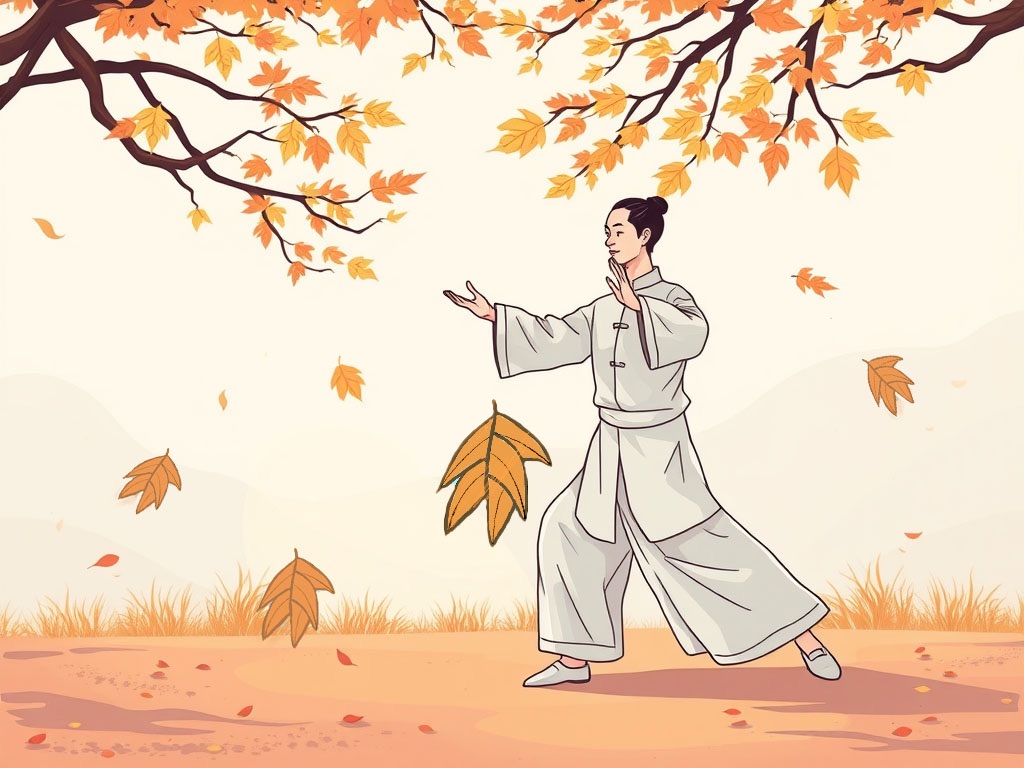
    In our fast-paced world, stress can feel like the default setting. Our bodies stay on high alert—muscles tense, hearts race, and minds flood with thoughts that swirl like autumn leaves on a windy day. But ancient practices like Tai Chi offer a gentle way to tell your nervous system, “It’s okay to relax.”

    Through slow movements, deep breathing, and a peaceful setting, Tai Chi sends powerful calming signals to your brain and body in a variety of ways.

    1. Slow, Gentle Movements

    Control without being controlling—for most, the goal of Tai Chi movements is to be smooth and controlled. It’s almost like moving through water—not because there’s actual water, but because the sensation, rhythm, and control mimic the experience of water’s gentle resistance and flow. You’re guiding your body like a river’s banks guide its current—not forcing it, but gently shaping its path. This kind of control comes from relaxation, alignment, and intention, creating movement that feels calm, balanced, and quietly powerful.

    2. Deep, Rhythmic Breathing

    Many Tai Chi forms encourage deeper, steadier breathing (typically belly breathing—not shallow chest breathing through the nose) to help calm the body. This kind of breathing stimulates the vagus nerve, a key player in calming the body and the main nerve of the parasympathetic nervous system. As you breathe slowly and fully, your brain gets the signal that everything is okay. Oxygen flows freely, stress decreases, and a sense of calm begins to take over.

    3. A Peaceful Environment

    Whether you’re practicing in a quiet room or a calm outdoor space, Tai Chi invites stillness. Then, there’s no loud music, no harsh lighting—just a focus on quiet and calm. This low-stimulation environment helps your brain stop scanning for danger and allows your body to feel safe and grounded.

    4. Mindful Attention

    One of the most powerful parts of Tai Chi is the way it focuses your attention. When you’re moving slowly, breathing deeply, and paying attention to how your body feels, you can’t also worry about emails or deadlines. This mindfulness quiets the “noise” of everyday life and helps reset your nervous system.

    The Message to Your Body: You’re Safe

    When you combine all of these elements—movement, breath, environment, and mindfulness—Tai Chi gently tells your body, “You don’t need to be on alert. You’re safe now.” Over time, your nervous system learns this message well. And when your body knows how to relax, you sleep better, think more clearly, and feel more at peace.

    Tai Chi doesn’t shout its message—it whispers it, again and again, until your whole system believes it.

    Finding Calm in Every Movement

    Tai Chi offers more than just exercise—it teaches your body and mind how to relax deeply. Through gentle movement, steady breath, and focused attention, it sends calming signals that help you find peace amid life’s busy pace. With regular practice, you’ll discover a quieter, calmer you waiting beneath the surface.

  • Push Hands in Virginia

    Push Hands in Virginia

    In the late 1990s, I watched a push hands match in a tournament in Winchester, Virginia that, like the Energizer bunny, kept on going, even after its two competitors seemed drained of energy. Their intensity impressed me. That match is among those that piqued my interest in push hands.

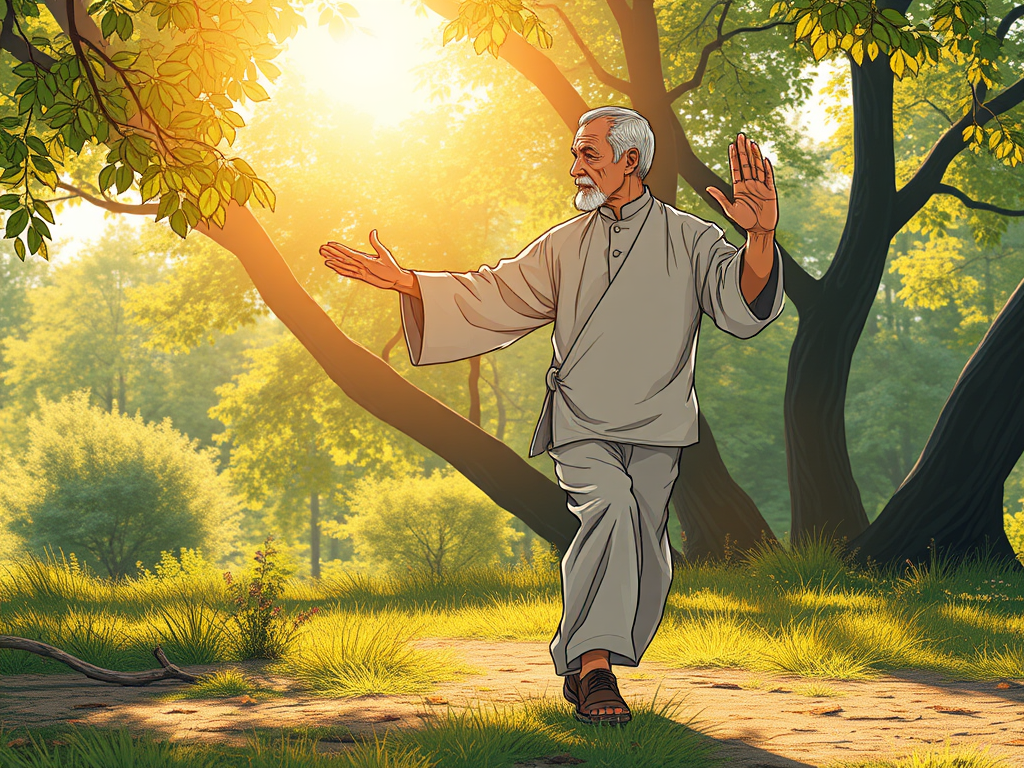
    In a push hands match during a tournament, two competitors face off, aiming to use balance, sensitivity, and Tai Chi principles to unbalance each other rather than overpower with strength. The match begins with light contact, often the backs of their wrists touching and their arms rounded and relaxed. Then, each person tests the other’s balance by pushing or seeking to redirect their movements.

    Points are awarded based on how well a person can maintain their own balance and control the opponent’s movements. The match ends when a clear winner is determined by who best applies these principles, focusing more on technique and strategy than on physical strength.

    For a quick, visual introduction to push hands, watch the beginning of this video by Michael Gilman.

    The aforementioned match was also among the ones that motivated me to write this poem, a creative reconstruction in which I weaved together multiple memories to share some of my push hand reminiscences.

    Trapped in Stillness 

    Two bulky men, similar in build
    but neither sumo-size,
    each strained to shift their foe—
    the contest stalled ...

    strength had replaced skill,
    sleeveless shirts soaked with sweat
    squeezed in a closet without walls,
    four arms tiring toward stillness,
    both men morphing into statues.

    Explanation

    The poem reimagines a push hands match I witnessed a century ago, mixing memory with metaphor to capture my interpretation of what I saw. While not a strict recounting of the match, it seeks to conveys the atmosphere, tension, and symbolism.

    Two men, similar in build but not as large as sumo wrestlers, compete in a battle of skill and balance, trying to move each other. At first, their movements are precise, but over time, strength replaces skill, and the contest slows. The image of being “squeezed in a closet without walls” suggests the feeling of being trapped, unable to break free. As their arms tire toward stillness, it symbolizes how action fades into exhaustion. The final image, where the men morph into statues, reflects the shift from struggle to complete stillness.

  • Haiku: Harmony of Tai Chi

    Haiku: Harmony of Tai Chi

    I’ll start this post with a poem that contributor Howard Rosenberg wrote and then share my thoughts about it.


    Warm breeze spreads the leaves
    arms rise—palms hide from the sun
    breath drifts out and back

    Introduction

    The haiku reflects the harmony between movement, breath, and nature in Tai Chi. Each line emphasizes how Tai Chi is a practice of gentle, flowing action, where the practitioner moves in sync with their body and the world around them. The imagery of the breeze, the rising arms, and the drifting breath conveys a sense of calm, balance, and interconnectedness.

    It reminds us that Tai Chi is not just a physical exercise but also a mindful, unifying one, where every movement is in harmony with both the body within and the environment without.

    This opening line creates a tranquil, natural scene, evoking calm and openness. The breeze reflects Tai Chi’s gentle, unhurried flow, moving with grace. The image of leaves spreading suggests the gradual, controlled expansion of a Tai Chi movement—like arms extending outward in a smooth, near-effortless flow—allowing energy to unfold naturally rather than being pushed or strained.

    Arms rise—palms hide from the sun

    In Tai Chi, movements are not rigid or isolated; they flow in sync with external forces like gravity, air, and even the presence of others. The phrase “palms hide from the sun” suggests an intentional response to light, as if the practitioner is adjusting to the natural world rather than resisting it. This reflects Tai Chi’s emphasis on adapting to external conditions, much like how water flows around obstacles instead of pushing through them.

    Instead of moving mechanically, Tai Chi encourages practitioners to be in tune with the energy around them, similar to how a leaf sways with the wind rather than standing stiffly against it.

    The act of concealing the palms could symbolize an awareness of changing forces, much like shading one’s eyes when the sun is bright—not as a reaction of discomfort, but as a natural adjustment.

    This motion is not just about physical movement but about being present and responding to the moment. Tai Chi practitioners adjust their movements based on breath (not all do), balance, and external influences, reinforcing the idea that the practice is about flowing with the world rather than against it.

    A Tai Chi practitioner is “attuned to the environment,” moving with awareness, adaptability, and balance, as is done when they adjust their palms to the sun, shift their stance with the breeze, or move in harmony with gravity. It’s about being fully present and responsive to the world around them.

    Breath drifts out and back

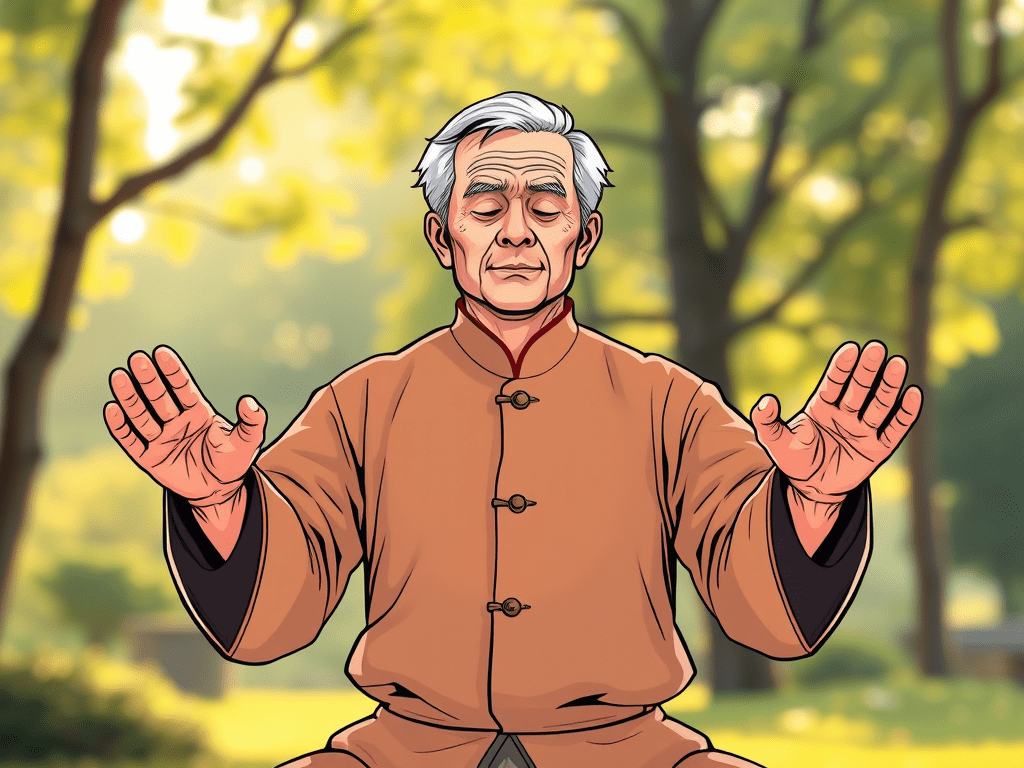
    Breath is not just a physical function but an integral part of Tai Chi. Even when breathing is not directly integrated into movement, such as inhaling while raising the arms, checking the diaphragm to ensure you’re breathing into the belly rather than the chest can foster mindfulness and strengthen the connection between body and mind.

  • Breathe from Belly, not Chest

    Breathe from Belly, not Chest

    When doing tai chi, how you breathe is very important. An excellent article on breathing was published in March 2024 on a Mayo Clinic website and written by a medical doctor. Titled “How belly breathing benefits your body, mind,” the article begins with this paragraph:

    “From the day you’re born, you know how to breathe correctly. That means letting the diaphragm — the large, thin muscle just below the rib cage — do the work of drawing air into the lungs and letting it out. It’s known as diaphragmatic or belly breathing, and it’s the most efficient and effective way to breathe.”

    Belly breathing has also been called “deep breathing,” which the NIH defines this way:

    “A relaxation technique in which a person focuses on taking slow, deep breaths. Deep breathing involves breathing in slowly through the nose and then out through the mouth using the diaphragm (the thin muscle that separates the chest from the abdomen) and abdominal muscles.”

    Though in tai chi you are advised to breathe through your nose, to my surprise, the Mayo Clinic asserts, “When it comes to the correct way to breathe, it doesn’t matter whether you breathe through your nose or your mouth. Where you breathe from matters: your belly and not your chest.”

    As every tai chi teacher I’ve learned from advised me to breathe through my nose, I will suggest that here — if you can.

    One of the reasons given in the Mayo Clinic article for belly breathing is that “Belly breathing promotes a sense of calm relaxation. That’s why it’s typically part of mindfulness practices and yoga.”

    After sharing benefits of belly breathing, the article reveals how you can check if you are a chest breather. The check is easy to do and shouldn’t take more than a minute or two. It is important to do because, according to the article, “over time, almost everyone needs to remember how. Rather than belly breathing, people begin chest breathing.”

    That has negative effects, one being that it “requires a lot of effort and moves less air.”

    The short, well-written article, which is easy to read, ends with this conclusion:

    “Not only is diaphragmatic or belly breathing efficient and powerful, it’s also free and has no side effects. Embrace belly breathing, and your body and mind will thank you.”